
Professor in Residence, Department of Architecture, GSD, Harvard University, Cambridge MA, USA
Open Access
Position Paper
AI Time, Timing, and Timelessness
VOLUME 8/2023 - Issue 2 , Pages: 207 - 213 published: 2024-01-12 Open Access
Position Paper

The Right to Housing: A Holistic Perspective. From Concept to Advocacy, Policy, and Practice
VOLUME 7/2022 - Issue 2 [The Right to Housing], Pages: 269 - 267 published: 2023-01-10 Open Access
CROSS-DISCIPLINARY STUDIES
Opinion

Baukultur in a Cybernetic Age: A Conversation
VOLUME 6/2021 - Issue 1 , Pages: 7 - 28 published: 2021-05-14We received and we gladly publish this conversation among distinguished theorists and scholars on an important topic, also aligned with the cross-disciplinary mission of our journal. [MS]
ABSTRACT - The article offers a multi-author conversation charting the future of architecture in light of the apparent tension between Baukultur, which combines the culture of building and the building of this culture, and the rapid changes brought about by digital technology, embracing cybernetics and artificial intelligence. The article builds on a discussion of Baukultur to debate in what sense buildings are “machines for living in,” then examines neuromorphic architecture wherein cybernetic mechanisms help buildings sense the needs of their occupants. It closes with an example of a building complex, Kampung Admiralty, that combines cybernetic opportunities with a pioneering approach to building “community and biophilia” into our cities. This article interleaves an abridged version of Michael Arbib’s (2019) article “Baukultur in a Cybernetic Age,” 1 with extensive comments by the co-authors.
Open Access
Position Paper
Gender Matters. The Grand Architectural Revolution
VOLUME 4/2019 - Issue 2 [GENDER MATTERS], Pages: 273 - 279 published: 2020-02-07 Subscribers only
CRITICISM
Essay
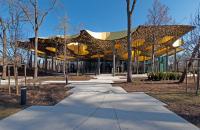
Japanese Architecture Returns to Nature: Sou Fujimoto in Context
VOLUME 7/2022 - Issue 1 , Pages: 7 - 36 published: 2022-05-16We received and we gladly publish a contribution by distinguished author Prof. Botond Bognar. [MS]
ABSTRACT - The essay introduces the development of Sou Fujimoto’s architecture as it has been influenced by various sources and experiences leading to his recently completed and highly recognized major project, the House of Hungarian Music in Budapest. Among these influences the contemporary economic and political conditions in Japan and beyond, as well as the nature-inspired work of prominent Japanese designers are discussed. Touching upon the seminal work by Tadao Ando and Toyo Ito, the essay also highlights the contrasts and occasional similarities between the so-called “White School” and “Red School” in contemporary Japanese architecture, in referencing nature as the primary source of their designs. Today, these “schools” are best represented, respectively, by the activities of SANAA and Kengo Kuma. Although Fujimoto’s architecture is clearly derivative and part of the radically minimalist White School, the House of Hungarian Music reveals an intimacy and richness
in articulating its relationship to the surrounding natural environment, which quality, if perhaps momentarily, points beyond the minimalism of the “Whites.”
Open Access
Opinion
Public Health Themes in Survival Through Design: A Son’s Appreciation
VOLUME 5/2020 - Issue 2 [HEALTHY URBANISM], Pages: 289 - 295 published: 2020-11-23 Open Access
Position Paper

Human Time as a Resource: Twelve Strategies for Re-thinking Urban Materiality
VOLUME 6/2021 - Issue 2 [The Good Material], Pages: 305 - 322 published: 2021-11-30 Subscribers only
Project
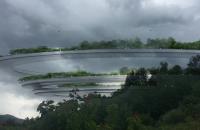
Magic Circles: The New Arks
VOLUME 5/2020 - Issue 2 [HEALTHY URBANISM], Pages: 297 - 310 published: 2021-01-13This article presents a project vision whose aim is to underline the necessity to completely change the current world narrative and start a new one, fully compatible with the protection of the planet and all its inhabitants. The authors started from the meaning of “device” and its role in this new narrative: a new salvific “ark,” an ecological living machine able to restore the balance between the forms of anthropization and the planet. The New Arks replace the current crystallized devices, unable to efficiently answer to the needed shift, in order to preserve the human systems, attacked by new social, ecological, and health diseases. In this vision, within the New Arks human beings regain the “lost paradise” through changes such as the implementation of green areas and biodiversity, less housing density, eco-friendly mobility, energy supply and technologies, and sustainable agricultural production. The outcome of this vision suggests the birth of a “Neoland,” a transformed world system in which the union between the natural accident and the anthropic genesis leads to the start of a new ethical and ecological narrative.
Open Access
REFLECTIVE PRACTICE
Book Review
"Modern and Site Specific: The Architecture of Gino Valle 1945-2003"
VOLUME 4/2019 - Issue 1 , Pages: 223 - 226 published: 2019-07-16
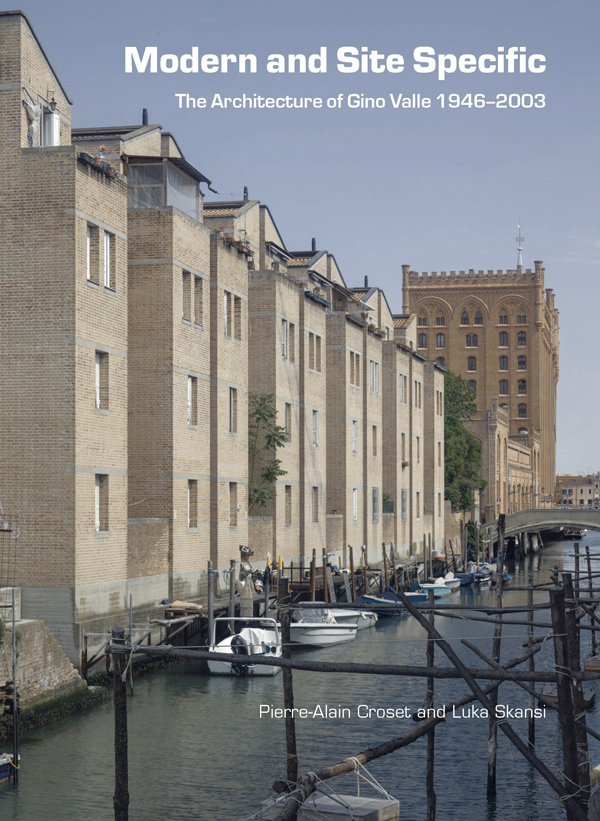
Modern and Site Specific:
The Architecture of Gino Valle 1945-2003
By Pierre-Alain Croset and Luka Skansi
London: Lund Humphries, 2018
250 × 190 mm
100 b/w and 150 color illustrations
352 pages
£50.00 GBP (hardcover)
ISBN: 978-1848222779
Open Access
CROSS-DISCIPLINARY STUDIES
Book Review
On Race and Modern Architecture
VOLUME 6/2021 - Issue 1 , Pages: 277 - 284 published: 2021-06-04

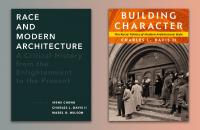
Race and Modern Architecture.
A Critical History from the Enlightenment to the Present
By Irene Cheng, Charles L. Davis II, and Mabel O. Wilson, eds Pittsburgh PA, USA: University of Pittsburgh Press, 2020
7 x 10 in. [17,8 x 25,4 cm]
96 b&w illustrations
424 pages
$45 paperback
July, 2020
ISBN: 978-082 296 6593

Building Character. The Racial Politics of Modern Architectural Style
By Charles L. Davis II
Pittsburg PA, USA: University of Pittsburgh Press, 2019
7 x 10 in. [17,8 x 25,4 cm]
89 b&w illustrations, 12 color plates
320 pages
$55 hardcover
December, 2019
ISBN: 978-0822945550